
Object Name:
Flute
Object ID:
57.513
Dimensions:
H–4.5 W–8 L–8.7 cm
Place of origin:
North America; Mexico
Material(s):
Processed Materials; Ceramic
Collection:
Anthropology; North America; Mexico
Case:
A Frog Flute from Mexico
Frog flutes are common all over Mexico today. They can be found in almost any market and they make for popular tourist trinkets, perhaps due to the fact that when they were originally discovered, they were treated as trinkets rather than artifacts. And yet these objects are much more than just curios or toys. Though their simplicity makes them seem more akin to stylized whistles than modern–day flutes, these ocarinas played an important role in ancient Central and Southern American cultures.
There recently has been a renewed interest in learning about ancient ocarinas. Through the efforts of the National Museum of Anthropology in Mexico, the Peabody Museum of Archeology and Ethnology at Harvard University, and various anthropologists, historians, and experts in acoustics, we now have a much better sense these objects played in Maya society. These objects have a rich history in Central and South America. With some dating back over 4,500 years ago, these whistles had served an important part in Maya traditions for their unique sound that mimicked that of frogs native to the region.
The Stanford University Archaeology Collections' frog flute (Object ID 57.513) is special. It doesn't produce just a single pitch. Seeing the place where one would blow into the flute (nestled into the legs of the toad), one notices two separate holes. In addition, the "earholes" of the figurine are actually connected to the resonating chamber, which is split into a left and a right half. When the ocarina was complete, these two chambers could interact to produce beats similar to that of the frog choruses of Central and Southern America. Analysis of the physics of frog flutes showed that they were actually powerful enough to pierce through the din of a religious ceremony or a large gathering. This volume was made possible by their solid design, which maximized the amount of vibration in a chamber designed to amplify itself. As a result of their construction, frog flutes like this one could be used in a variety of locations with varying levels of noise and acoustic resonances.
These frog flutes were carefully crafted in order to not only be able to manipulate resonance and the splitting of air, but to also do this while honoring the natural world around them. This is idea of mimicking the world around them is characteristic of Maya expression. Alfred Tozzer and Glover Allen, researchers from the Peabody Museum, explain in their book Animal Figures in the Mayan Codices that frogs were associated with the coming of rain and the rain god Chaac. Frog flutes were most likely used to imitate the frogs of the region in order to use their timbre to honor Chaac and to help summon the rains. As a result, researchers believe that these frog flutes played an important part in rituals dealing with rain for the Mayas and other native people of Central and Southern America. Despite these advancements, there are still numerous discoveries emerging from the study of these seemingly quotidian artifacts as scientists and experts continue to learn about the ancient cultures of Central and South America through the items they left behind.
––– Río Padilla–Smith
References Cited
"The Music of the Maya: Mysterious Whistles Confound Experts." Ancient Origins. Ancient Origins, 28 Feb. 2015. Web. 02 May 2017. <http://www.ancient–origins.net/artifacts–other–artifacts/music–maya–mysterious–whistles–confound–experts–002723>.
Rawcliffe, Susan. "Sounding Clay: Pre�Hispanic Flutes." The Journal of the Acoustical Society of America 109.5 (2001): 2366. Web.
Rios, Marlene Dobkin De, Norman Alger, N. Ross Crumrine, Peter T. Furst, Robert C. Harman, Nicholas M. Hellmuth, Nicholas A. Hopkins, William Clyde King, Joan D. Koss, Weston La Barre, Herbert J. Landar, Joesph K. Long, Tatiana Proskouriakoff, Arthur J. Rubel, Francisco Samaranch, and Roger W. Wescott. "The Influence of Psychotropic Flora and Fauna on
Maya Religion [and Comments and Reply]." Current Anthropology 15.2 (1974): 147–64. Web.
Tozzer, Alfred M., and Glover Morrill Allen. Animal Figures in the Maya Codices. Millwood, NY: Kraus Reprint, 1978. Print.
Frog flutes are common all over Mexico today. They can be found in almost any market and they make for popular tourist trinkets, perhaps due to the fact that when they were originally discovered, they were treated as trinkets rather than artifacts. And yet these objects are much more than just curios or toys. Though their simplicity makes them seem more akin to stylized whistles than modern–day flutes, these ocarinas played an important role in ancient Central and Southern American cultures.
There recently has been a renewed interest in learning about ancient ocarinas. Through the efforts of the National Museum of Anthropology in Mexico, the Peabody Museum of Archeology and Ethnology at Harvard University, and various anthropologists, historians, and experts in acoustics, we now have a much better sense these objects played in Maya society. These objects have a rich history in Central and South America. With some dating back over 4,500 years ago, these whistles had served an important part in Maya traditions for their unique sound that mimicked that of frogs native to the region.
The Stanford University Archaeology Collections' frog flute (Object ID 57.513) is special. It doesn't produce just a single pitch. Seeing the place where one would blow into the flute (nestled into the legs of the toad), one notices two separate holes. In addition, the "earholes" of the figurine are actually connected to the resonating chamber, which is split into a left and a right half. When the ocarina was complete, these two chambers could interact to produce beats similar to that of the frog choruses of Central and Southern America. Analysis of the physics of frog flutes showed that they were actually powerful enough to pierce through the din of a religious ceremony or a large gathering. This volume was made possible by their solid design, which maximized the amount of vibration in a chamber designed to amplify itself. As a result of their construction, frog flutes like this one could be used in a variety of locations with varying levels of noise and acoustic resonances.
These frog flutes were carefully crafted in order to not only be able to manipulate resonance and the splitting of air, but to also do this while honoring the natural world around them. This is idea of mimicking the world around them is characteristic of Maya expression. Alfred Tozzer and Glover Allen, researchers from the Peabody Museum, explain in their book Animal Figures in the Mayan Codices that frogs were associated with the coming of rain and the rain god Chaac. Frog flutes were most likely used to imitate the frogs of the region in order to use their timbre to honor Chaac and to help summon the rains. As a result, researchers believe that these frog flutes played an important part in rituals dealing with rain for the Mayas and other native people of Central and Southern America. Despite these advancements, there are still numerous discoveries emerging from the study of these seemingly quotidian artifacts as scientists and experts continue to learn about the ancient cultures of Central and South America through the items they left behind.
––– Río Padilla–Smith
References Cited
"The Music of the Maya: Mysterious Whistles Confound Experts." Ancient Origins. Ancient Origins, 28 Feb. 2015. Web. 02 May 2017. <http://www.ancient–origins.net/artifacts–other–artifacts/music–maya–mysterious–whistles–confound–experts–002723>.
Rawcliffe, Susan. "Sounding Clay: Pre�Hispanic Flutes." The Journal of the Acoustical Society of America 109.5 (2001): 2366. Web.
Rios, Marlene Dobkin De, Norman Alger, N. Ross Crumrine, Peter T. Furst, Robert C. Harman, Nicholas M. Hellmuth, Nicholas A. Hopkins, William Clyde King, Joan D. Koss, Weston La Barre, Herbert J. Landar, Joesph K. Long, Tatiana Proskouriakoff, Arthur J. Rubel, Francisco Samaranch, and Roger W. Wescott. "The Influence of Psychotropic Flora and Fauna on
Maya Religion [and Comments and Reply]." Current Anthropology 15.2 (1974): 147–64. Web.
Tozzer, Alfred M., and Glover Morrill Allen. Animal Figures in the Maya Codices. Millwood, NY: Kraus Reprint, 1978. Print.
Provenance:
Received from E. A. Rogers on an unknown date. Deaccessioned to Anthropology Department on 8/1999.
Click to Enlarge
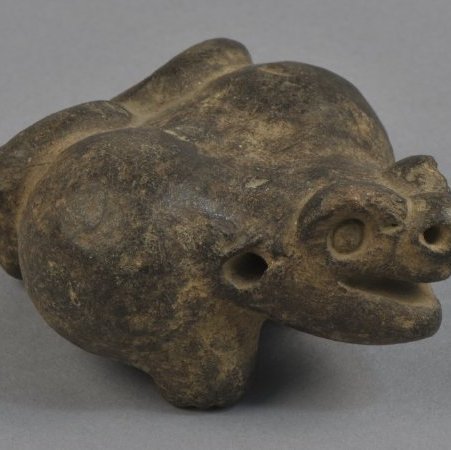 57.513 - Object
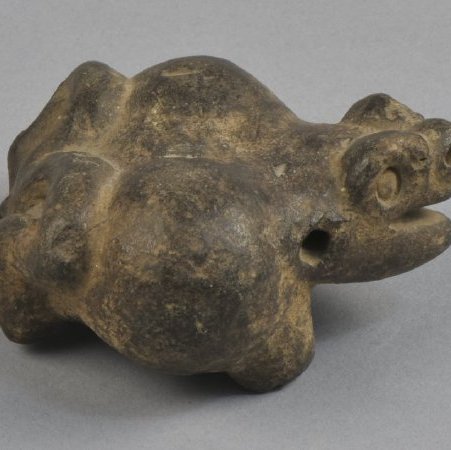 57.513 - Detail - Side Shot
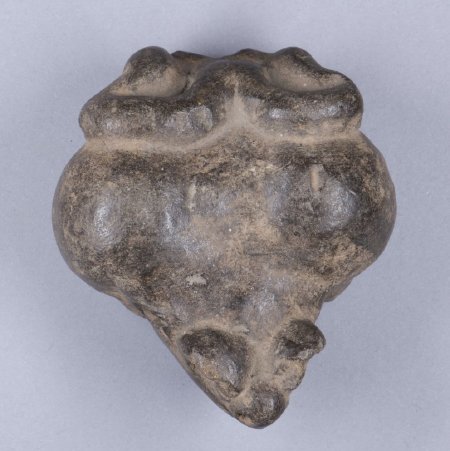 57.513 - Detail - From Above
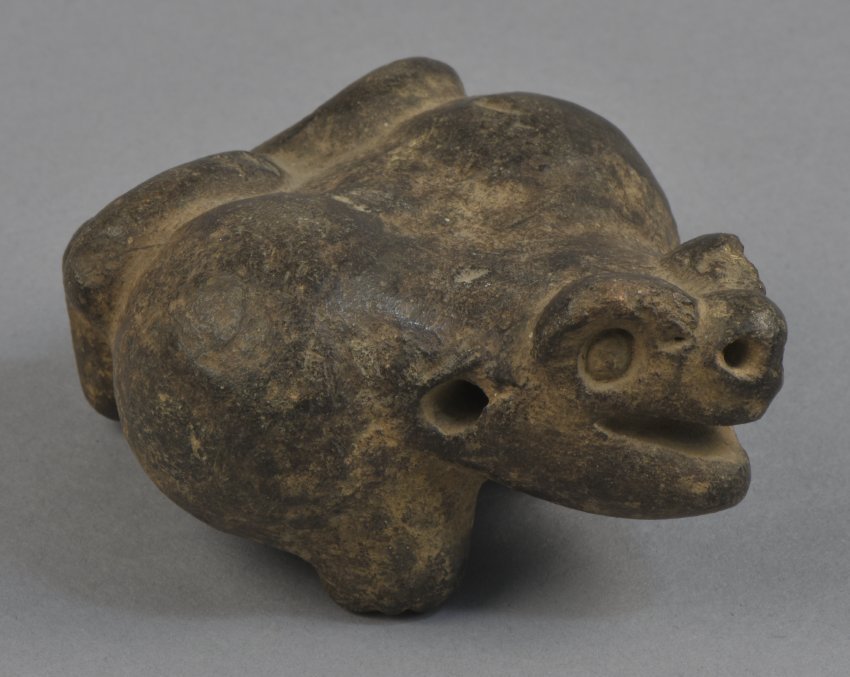 57.513 - Object
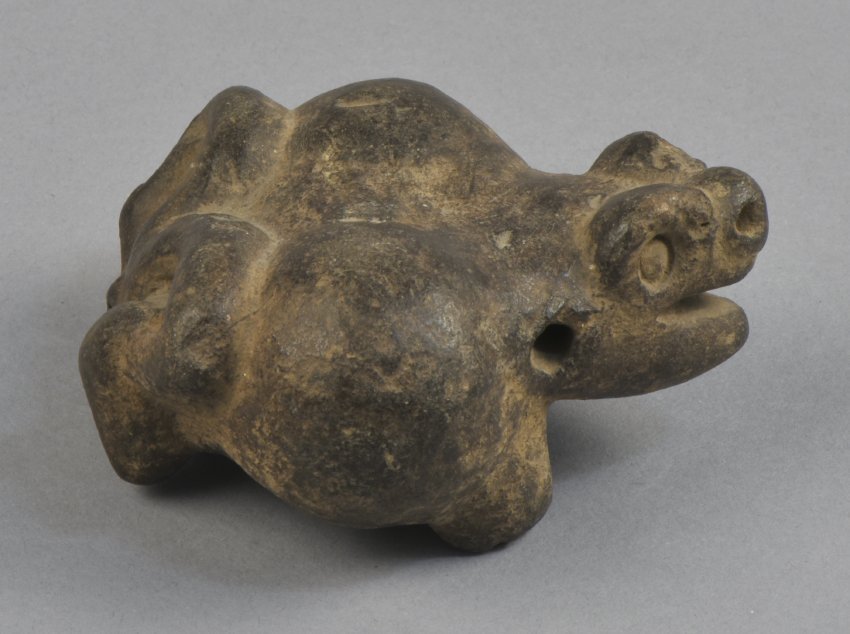 57.513 - Detail - Side Shot
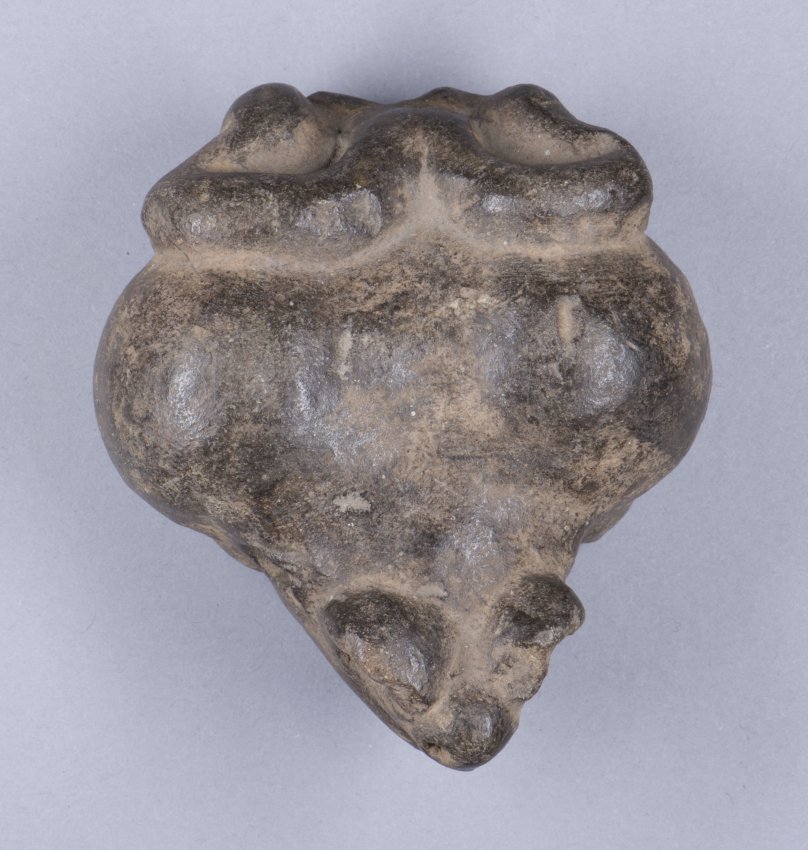 57.513 - Detail - From Above