Maintenance
Maintenance: Administration
II. Structure of the hierarchical administration
A. SAYA AND SUYU: People in charge
B. AYLLU: Laborers
C. KARAKAS: Leaders of the Ayllu
D. MILITIA (mit’a) SERVICE
Back to
Maintenance Front PagePrevious Page: Maintenance | Next Page : Production
I. Management of resources
The Incas conquered territories stretching from Eucador to central Chile, governing over more than 12 million people. In response to the expanding agricultural state, the Incas created a heirarchical administration basedon labor taxation. The few thousand Inca people were considered the elite ruling class. The remainder of the empire was composed of diverse ethnic groups.
Cuzco was the sacred imperial capital where the Incas erected religious monuments and sustained the administration for resource extraction from the ethnic groups. The central priority of the empire was to provide support for the elite and to maintain the vast agricultural empire. Top of PageII. Structure of the hierarchical administration
The emperor stood at the apex of the administrative pyramid. The next highest level consisted of four administrative quarters, suyu, centered at Cuzco. Each suyu province was divided into two or three bounded territory units called saya. Each saya was then divided into ayllu, the basic people unit of the labor force. Karakas were the leaders of the ayllu. The Incan philopsophy was not to overwhelm but to centralize power within ethnic groups to promote peaceful ruling. Although there were Incan leaders in Cuzco, the management level of the saya, ayllu, and Karakas were divided along ethnic lines with native leaders.
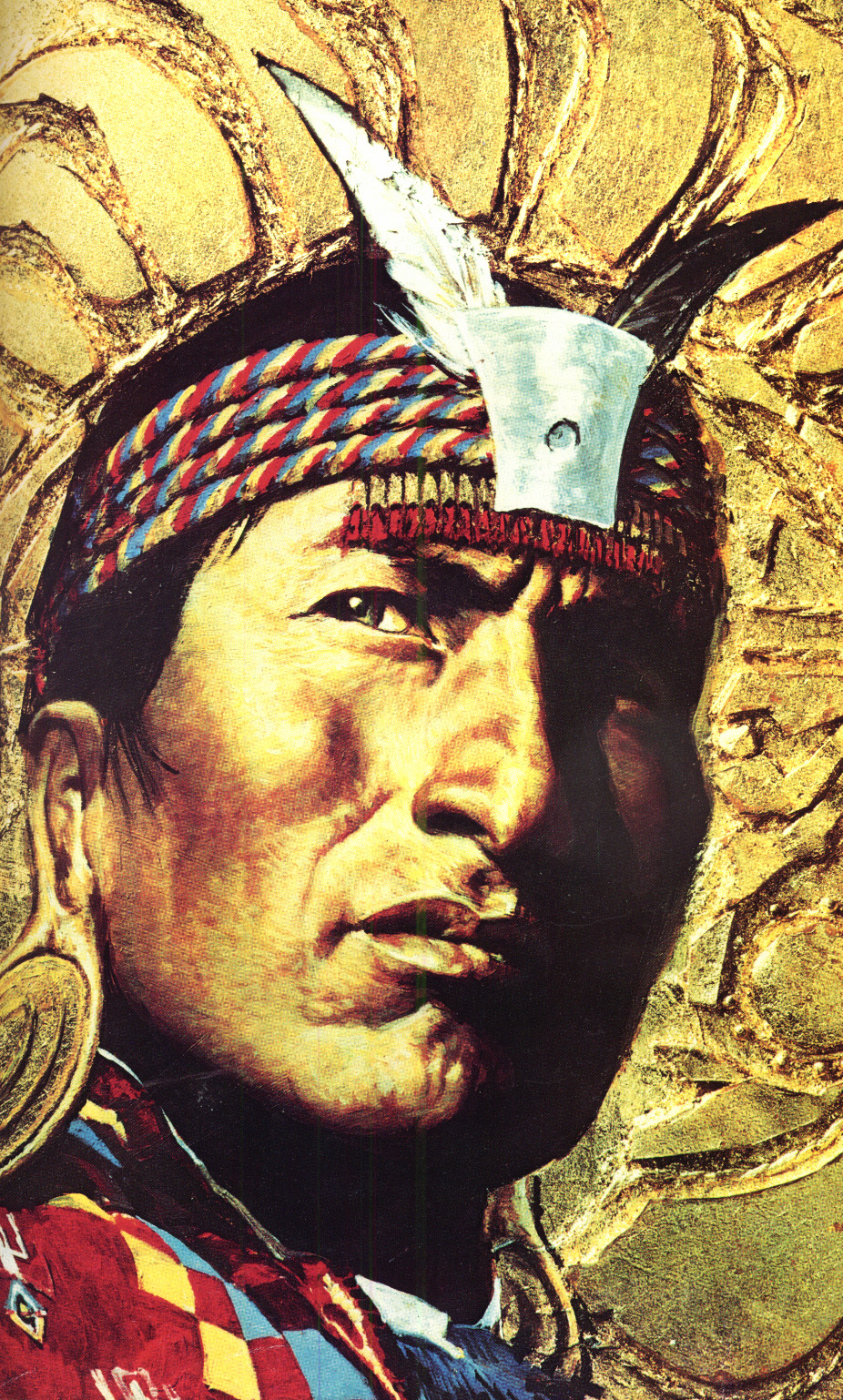
A. SAYA AND SUYU: People in charge
In order to maintain such a vast empire with diverse ecology and ethnicity, the Incas created a system in which each region was self sufficient in food production. These saya and suyu leaders were in charge of resource extraction from these region. Each self-contained province was responsible for contributing agricultural surplus, labor, and natural resources (ie. metal) to the Incan empire. The surplus was then redistributed by the saya and suyu into three sections:
- Inca state for official use: priests for religious ceremonies, supplies for the military and state officials, food for travelers
- Storage for famine
- Local people’s consumption
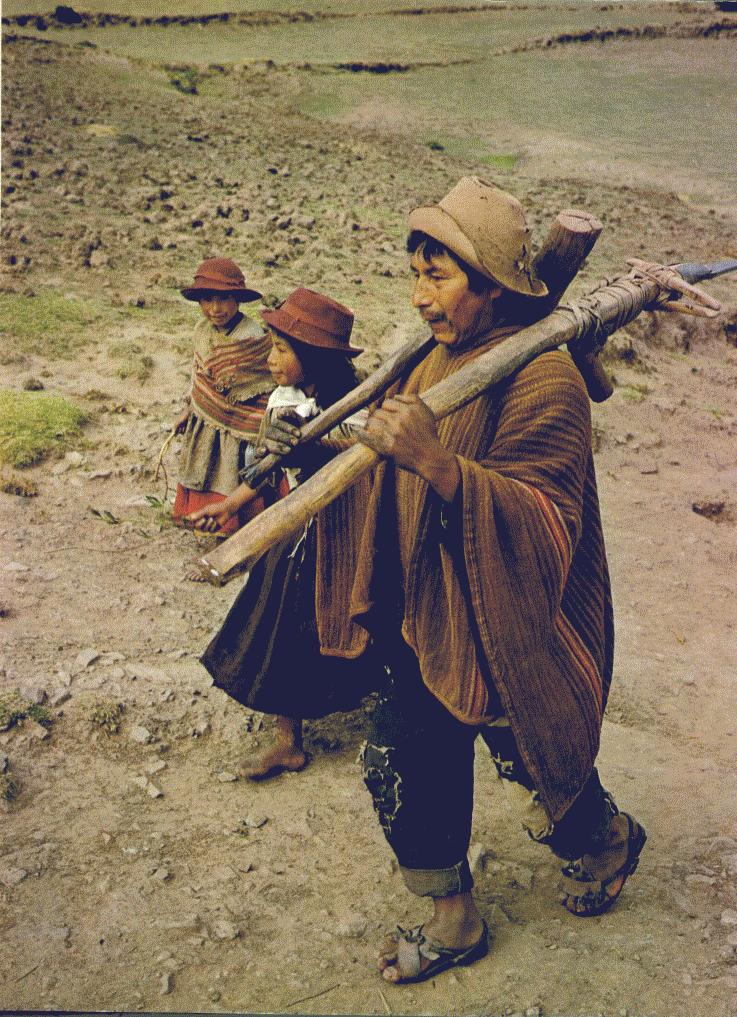
B. AYLLU: Laborers
The ayllu was a kinship group of up to several thousand members and was the basic resource holding unit who worked for the administration. The ayllu managed lakes, springs, rivers, canals, pasture, land, and farmland for the administrators in Cuzco. At birth a person inherited relationships and responsibilities such as the right to work land. Kinship was valued because relatives worked together to share resources, labor and profits. The system of reciprocity and the frequent use of food as a commodity ensured that resources were redistributed among the ayllu.
C. KARAKAS: Leaders of the Ayllu
Karakas, people who could claim closer relations to ayllu's founding ancestors, were the hereditary rulers of the ayllu. Most hereditary rulers were male but some were female. Karakas managed the commoners underneath them, taking responsibility for the people's well-being. They provided mediation between heaven and earth and negotiated with cosmic forces. In addition, karakas settled water and land disputes, maintained the agricultural and herding calendar and initiated plowing, planting and harvesting at proper times. In return men and women were required to work for the karakas on the ayllu land as a form of agricultural taxation.
D. MILITIA (mit’a) SERVICE
The mit'a service was a draft by the state of all males that provided a labor force for military construction and other services for various lengths of time. The military was used to defend the food being distributed and supply facilities. Also they were used as a labor force to create many of the roads networks, irrigation systems, terrace systems and architectural monuments. The Inka understood that the most efficient way to annex a new territory was through peaceful surrender. Therefore, the military did not develop sophisticated means of destruction. Rather the military used persuasive combinations of threats of destruction for those resisting and incentives for those who relented.
Back to
Maintenance Front PagePrevious Page: Maintenance | Next Page : Production