Promoting Better Care for Children with Special Needs
 n January, the Foundation announced the decision by the Board of Directors
to change the focus of the Foundation’s investments from promoting preteen
emotional and behavioral health to improving systems of care for children with
special health care needs.
n January, the Foundation announced the decision by the Board of Directors
to change the focus of the Foundation’s investments from promoting preteen
emotional and behavioral health to improving systems of care for children with
special health care needs.
This new focus area brings the Foundation into closer alignment with its partners at Lucile Packard Children’s Hospital and Stanford School of Medicine. It also addresses the fact the number of children with special needs is increasing, and that these children are the primary users of health care resources for children. The Board believes that the Foundation must play a role in ensuring a better and more complete continuum of care for children with special needs.
The Foundation is exiting gradually from the preteen area, with several grants continuing through 2011. The Board passed the final docket of preteen grants in June 2009.
The goal of the new work is to articulate a vision of an enhanced model of health care delivery for children with special health care needs, and invest in programs and projects that can help move the system closer to that model.
The Foundation began its transition to the new work in 2008 by hosting two convenings of experts who developed a model that calls for a system that provides high-quality, family-centered, coordinated care within a medical home, funded by a unified, efficient and comprehensive payment system.
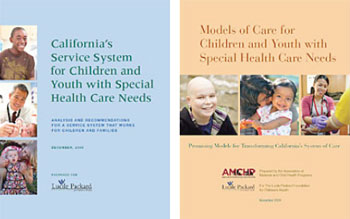
In 2009, the Foundation built on this work by acquiring additional data about children with special health care needs, and commissioning reports that described the system of care in California and models that had success elsewhere in the country.
The Foundation also invested in work by the State of California to apply for a Medicaid Waiver from the federal government. Waivers allow the states to implement innovative programs, and California would focus on restructuring California Children’s Services, the largest public funder of services for children with special health care needs. Under the waiver, the state would test pilot models of improved systems of care for these children.
By the end of 2009, several investment strategies were under development, including an effort to address special health care needs in pediatric residency programs. Going forward, the Foundation will invest in programs to enhance the system of care, and will devote funds to advocacy work and communications efforts that bolster these efforts.
More information about the Foundation’s work regarding children with special health care needs can be found on the website. lpfch.org/informed/cshcn/