Albert Müller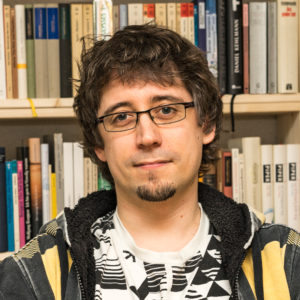
Dept/Org: Civil & Environmental Engineering
Staff Scientist, 2015-2024
I’ve always been fascinated by the concept of microbial ecology – the idea that nature is, to a large degree, based on the actions and interactions of microorganisms that seem to be completely hidden to our senses, but nevertheless can be figured out in extreme detail using the clever tricks of molecular microbiology. During my PhD at DOME in Vienna, I did research on symbiosis (between amoebae and their endosymbionts), biogeography (of thermophilic spore-formers in the world’s oceans), carbon degradation (in Arctic marine sediments), and diversity and phylogeny of sulfate reducing microorganisms. Here at Stanford, I’m trying to figure out the spatial constraints on microbial syntrophy when bacteria are faced with insoluble substrates and how methanogens allocate their proteome under different growth conditions. Outside the lab, I like warm weather, being in nature, observing animals, video games, music, and science fiction.
Ali McCully
Dept/Org: Civil & Environmental Engineering
Post-Doc, 2018-2022
I am interested in how diverse microbial metabolisms interact and shape global processes, especially in anaerobic communities. During my PhD at Indiana University, I studied metabolic interactions within a model bacterial coculture to uncover principles that govern microbial mutualisms. After graduating in 2018, I joined the Spormann lab to study the physiology and metabolism of microbes living within the deep-sea biosphere. Outside of lab I enjoy playing the bass clarinet, exploring new restaurants, and interacting with animals.
Wenyu Gu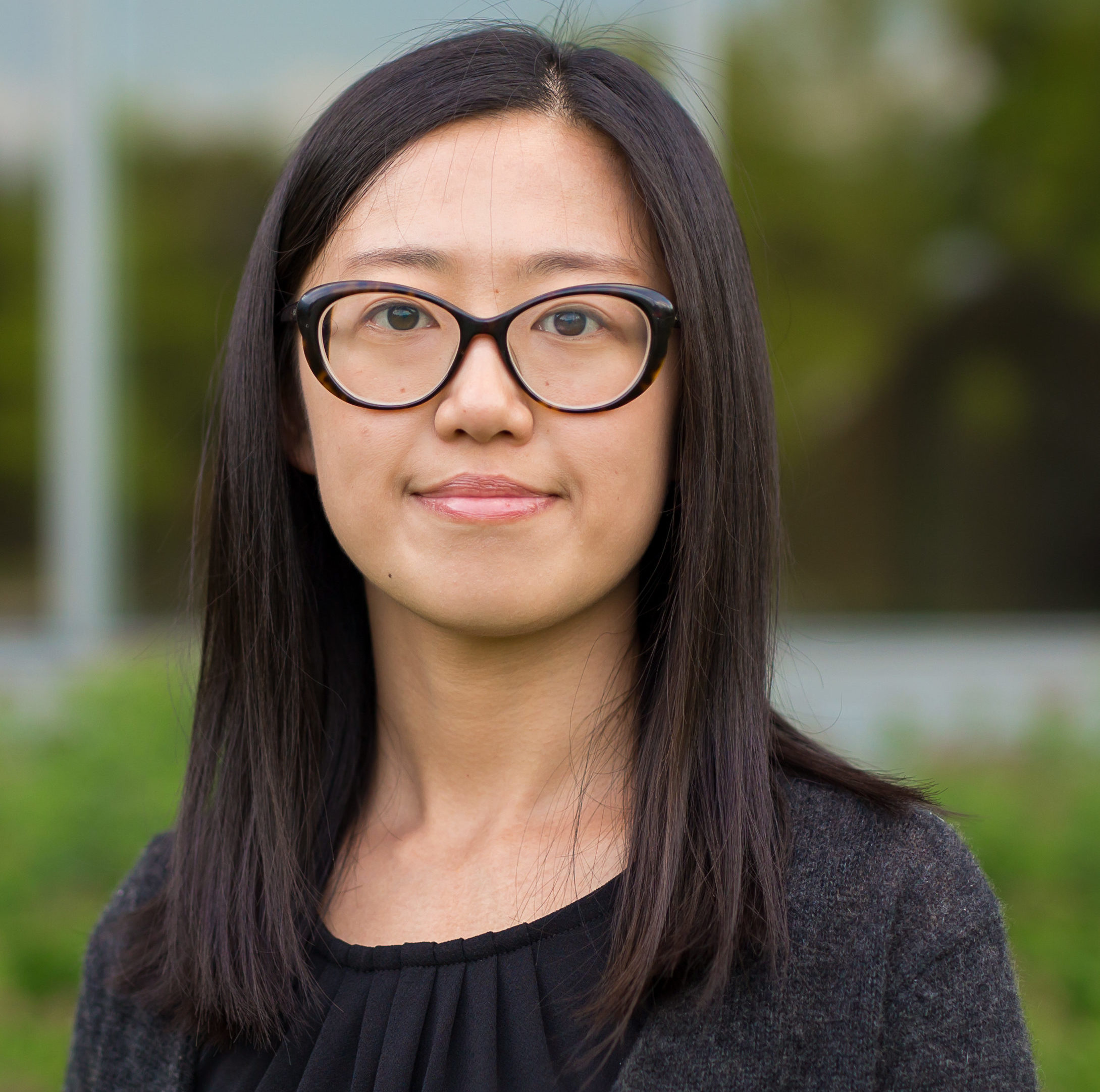
Dept/Org: Civil & Environmental Engineering
Post-Doc, 2017-2022
My research goal is to understand and develop novel microbial mechanisms to address environmental and industrial problems, with current research focusing on enzymology of reductive dehalogenase. I’m an animal lover, enjoy reading and traveling.

Frauke Kracke
Dept/Org: Civil & Environmental Engineering
Post-Doc, 2016-2022
I’m a biochemical engineer by training and I find my motivation in engineering microbial solutions for a more sustainable human future. During my PhD at the University of Queensland, Australia, I started working on bio-electrochemical systems for production of chemicals and fuels from renewables. By using an integrated approach of in silico modelling and in vivo pure culture studies, I developed a strong background in bioelectrochemistry and cellular electron transfer mechanisms. After graduating from UQ in April 2016, I joined the Spormann lab where I continue to look at exciting microbe-electrode interactions with a focus on production applications.
John “Jack” Ruth
Dept/Org: Chemical Engineering
Ph.D. Student, 2017-2021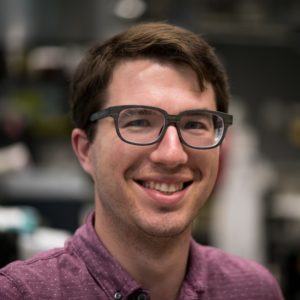
I’m interested in the interface of biology and energy. I’m currently researching the use of anaerobic enzyme complexes from Methanococcus maripaludis for cathodic electrosynthesis, focusing on direct and mediated electron transfer from cathodes to oxidoreductase enzymes. When not in lab, I like to ski, play guitar, read novels and go hiking.
Jessica Grembi
Dept/Org: Civil & Environmental Engineering
Ph.D. Student, 2014-2019
My interests lay at the intersection of microbial ecology and international public health. My research focuses on the effects of water, sanitation, handwashing (WSH) and nutritional interventions on the carriage of enteropathogens for children in low- and middle-income countries. I am particularly interested in how enteropathogen exposure early in life can influence the development of a gut ecosystem that allows optimal absorption of nutrients by the host. I’m particularly interested in the potential for a microbial biomarker for a difficult to diagnose subclinical condition that reduces the absorptive capacity and increases permeability of the small intestine (environmental enteropathy), understanding the root causes of the pathology, and how these effects might be mitigated through the gut microbial ecosystem.
Miriam Windler
Dept/Org: Civil & Environmental Engineering
Post-Doc, 2015-2019
I’m a biologist with a background in plant physiology and phycology. My research interest is mainly the influence of bacterial communities on algal productivity. During my PhD at the University of Konstanz, I studied the effect of bacteria on formation of biofilm and extracellular polymeric substances of algae. Here at the Stanford University, I am focused on how bacteria can increase algal production of biofuel precursors.
Ross Milton
Dept/Org: University of Geneva
After pursuing a BSc and PhD (Chemistry and Electrochemistry) in the United Kingdom of everlasting sunshine (…), Ross made the decision to move to the States to develop his scientific career and experience blue skies for the first time. He is interested in internal electron transfer mechanisms/pathways of oxidoreductases and developing electron transfer strategies with electrodes, with current research focusing on nitrogenase (the role of ATP hydrolysis) and heterodisulfide reductase (flavin-based electron bifurcation). In his free time he enjoys outdoor activities (hiking/camping) and has recently taken up squash. He believes that he has all of the funniest jokes and wishes that others would appreciate his jokes more.

Srijay Rajan
Dept/Org: Civil & Environmental Engineering
Research Assistant, July, 2015 – March, 2018
I’m using an in vitro pharmacokinetic/pharmacodynamic (PK/PD) model to research biofilm physiology and antibiotic killing of biofilms. I enjoy hiking, golfing, cooking, reading, and listening to podcasts.
Ian Avery Bick
Dept/Org: Civil & Environmental Engineering
M.S. Student, 2016-2018
Avery is a M.S. student in Environmental Engineering & Science with research interests in water quality, biological treatment processes, and environmental justice. In the Spormann lab he studies reductive dehalogenation as well as the effect of starvation on dechlorination rates in reducing and oxidizing conditions through live/dead staining and flow cytometry. Outside of the lab, he enjoys biking, producing music, and reading Isaac Asimov and Philip K. Dick novels.
Ann Karim
Dept/Org: Zymergen
Ph.D. Student, April, 2011-December, 2017
I am interested in strain engineering of non-traditional microbes. During my time in the Spormann Lab I worked on developing tools for controlling of protein levels in Methanosarcina acetivorans C2A. These tools included a promoter library, a ribosome binding site library, identifying new regulatory sequences for enhancing protein production, and CRISPR interference.
Koshlan Mayer-Blackwell 
Ph.D. Student, October, 2010-May, 2016
Dept/Org: Civil And Environmental Engineering
Idiosyncratic combinations of reductive dehalogenase (rdh) genes are a distinguishing genomic feature of closely related organohalogen-respiring bacteria. This feature can be used to deconvolute the population structure of organohalogen-respiring bacteria in complex environments and to identify relevant subpopulations, which is important for tracking interspecies dynamics needed for successful site remediation. Here we report the development of a nanoliter qPCR platform to identify organohalogen-respiring bacteria and populations by quantifying major orthologous reductive dehalogenase gene groups. The qPCR assays can be operated in parallel within a 5184-well nanoliter qPCR (nL-qPCR) chip at a single annealing temperature and buffer condition. We developed a robust bioinformatics approach to select from thousands of computationally proposed primer pairs those that are specific to individual rdh gene groups and compatible with a single amplification condition. We validated hundreds of the most selective qPCR assays and examined their performance in a trichloroethene-degrading bioreactor, revealing population structures as well as their unexpected shifts in abundance and community dynamics.
Holly Sewell 
PhD student, September, 2010-September, 2015
Dept/Org: Civil & Environmental Engineering
External electron transfer mechanisms for cathodic electron uptake.
Anutthaman Parthasarathy 
Post-Doc, October, 2012 – April, 2015
Dept/Org: Civil & Environmental Engineering
I am a biochemist by training. My specialization is in anaerobic enzymology and metabolism. i have worked on amino acid catabolism in mesophiles and extremophiles, protein purification, protein spectroscopy, CoA biochemistry and hexane degradation from 2005-12. At the Spormann lab, i am working on the heterologous overproduction of the vcrA (reductive dehalogenase) in E. coli with the aim of obtaining pure protein for crystallisation trials. Interest in Biochemical characterisation of vcrA (reductive dehalogenase).
Janus Haagensen 
February, 2008 – April, 2015
Dept/Org: DTU Centre for bio sustainability, Hørsholm, Denmark
Phenotypic diversity and bistability in Vibrio cholerae.
Anne-Kristin Kaster 
March, 2011 – June, 2014
Dept/Org: Leibniz-Institut DSMZ
Junior research Group Leader
Reductive dehalogenation; single cell genomics
Simone Haag
September, 2013-February, 2014
Svenja Lohner 
Ph.D. Student, November, 2008-September, 2013
Dept/Org: Science Buddies
Staff scientist
Heterologous expression and in vitro maturation of VcrA and other reductive dehalogenases. Microbial electrosynthesis of hydrocarbons via autotrophic CO2 fixation.
Ian Marshall 
June, 2007 – September, 2012
Dept/Org: Center for Geomicrobiology, Aarhus University, DK
Characterization of interspecies interactions in complex microbial ecosystems.
Dagmar Woebken 
Post-Doc, August, 2008 – December, 2011
Dept/Org: Division of Microbial Ecology, Department of Microbiology and Ecosystem Science, University of Vienna
Group Leader
During my time as a postdoctoral fellow in the Spormann Lab I investigated the function of microorganisms in coastal microbial mats. My goal was to link the identity and function of microorganisms in these laminated cyanobacteria-dominated mats using molecular techniques such as nanoSIMS and metatranscriptomic studies.
Tyrrell A. Nelson 
July, 2008 – July, 2011
Dept/Org: University of California San Francisco, dept. of Pathology
Senior Research Associate
Microbial metabolic processes and interactions within human/animal hosts. High throughput NGS multiplexed metatranscriptomic and metagenomic assay development.
Paul J. McMurdie II 
June, 2005 – December, 2010
Dept/Org: Second Genome, Inc.
Biostatistician
http://www.stanford.edu/~mcmurdie/
Genomic Adaptation for Organohalide Respiration of Vinyl Chloride and Other Priority Pollutants by the Anaerobic Bacterium Dehalococcoides.
Jana Müller 
January, 2004 – December, 2010
Dept/Org: Calysta Biosystems
Regulation of biofilm formation in two γ-proteobacteria: Shewanella oneidensis and Vibrio cholerae A1552.
Carmen D. Cordova 
June, 2004 – July, 2010
Dept/Org: Natural Resources Defense Council
Sustainable Livestock Science Fellow
Molecular basis of respiratory plasticity in Shewanella oneidensis MR-1.
Laura Hug 
May, 2009 – August, 2009
Dept/Org: University of California Berkeley, Banfield Lab
In collaboration with Joey McMurdie, creation of an unsupervised binning pipeline and visualization tool for metagenome sequence datasets.
Frank Löffler 
March, 2009-September, 2009
University of Tennessee / ORNL
Governors Chair Professor
Discovering ways to clean the environment, counter the damage humans do to ecosystems, and improve environmental health. How naturally occurring bacteria break down pollutants like chlorinated solvents, radioactive wastes, and greenhouse gases.
Sebastian F. Behrens 
January, 2004-October, 2008
Dept/Org: University of Tübingen
Assistant Professor (akad. Rat)
Environmental microbiology/molecular microbial ecology. Linking environmental processes to the spatial-temporal distribution and metabolic activity of key functional groups of microorganisms. I follow an interdisciplinary approach that combines the disciplines biogeochemistry with microbiology and molecular biology to understand the basic microbial ecology principles driving the biogeochemical cycling of metals, metalloids, the biodegradation of organic contaminants, and greenhouse gas emissions from the molecular to the ecosystem scale.
Jonathan Göke 
M.S. Student, May, 2007-July, 2007
Genome Institute of Singapore
Masters Thesis on assembly of Dehalococcoides strain VS genome in collaboration with Joey McMurdie.
Galit Meshulam-Simon 
November, 2001 – September, 2006
Dept/Org: Aurora Algae
Research Scientist
Jochen Müller 
May, 2000-March, 2003
Dept/Org: Helmholtz Centre for Environmental Research – UFZ
Senior Scientist
Microbes of environmental importance. The role of microbes involved in degradation of organic pollutants and in the global sulfur cycle through genomic, functional genomic, genetic, and biochemical approaches.
http://www.ufz.de/index.php?en=19709
Alison Cupples
January, 1999-December, 2003
Dept/Org: Michigan State University
Associate Professor
http://www.egr.msu.edu/~cupplesa/
Harry Beller
January, 1995-December, 1998
Dept/Org: Lawrence Berkeley National Laboratory and Joint BioEnergy Institute
Director of Biofuels Pathways (JBEI)
Johannes Gescher 
Dept/Org: Karlsruhe Institute of Technology
Professor
Dissimilatory iron reduction.
Josie Yu 
Dept/Org: San Mateo County Workforce Development
Education Liaison
Kai Thormann 
Dept/Org: Max Planck Insitute for Terrestrial Microbiology, Marburg
Assistant Professor
Lily Chao 
Dept/Org: Amyris
Enzymologist
Cyclic di-GMP Signaling in Shewanella oneidensis.
Luke Burow 
Dept/Org: IP Australia
Ecophysiology and metatranscriptomics of hydrogen producing microbial mats.
Plamena Entcheva-Dimitrov 
Dept/Org: Abbott Vascular, Santa Clara, CA
Research Scientist
Renée Saville 
Dept/Org: Calysta Biosystems
Dynamics and control of Shewanella oneidensis biofilms.
Shauna Rakshe 
Dept/Org: Chemical Engineering
Cyclic di-GMP Signaling in Shewanella oneidensis.
Soni Shukla 
Dept/Org: Geneweave Bioscience
Research Scientist
Wing-On (Jacky) Ng 
Dale A. Pelletier
Dept/Org: Oakridge National Laboratory
Senior Research Scientist
Edward Driggers
Dept/Org: Microbia
Heenam Kim
Dept/Org: The Institute for Genome Research (TIGR)
Hope A. Johnson
Dept/Org: Department of Biology, Cal State Fullerton
Assistant Professor