
CARL is dedicated to improving outcomes for patients with arrhythmias (heart rhythm irregularities), by developing state-of-the-art bioengineering-computational tools, acquiring exquisitely detailed clinical data, then testing solutions prospectively in patients.
We have a 20 year history of advancing the understanding and treatment of heart disease by integrating computer modeling and data science – including #artificial intelligence – with often unique patient data from procedures or the bedside. Our work has been funded continuously since 2001 by the National Institutes of Health (see history and current grants of Drs. Narayan, Baykaner and Rogers) and agencies including the Fulbright Foundation, Doris Duke Charitable Foundation, American Heart Association, Heart Rhythm Society and the American College of Cardiology. We are particularly grateful to the Laurie C McGrath Foundation for their generous support.
Dr. Narayan is also Director, with Dr. Alison Marsden (co-Director), of the Stanford T32 NIH Training Program in Computational Medicine (CHIP, Computational medicine in the Heart: Integrated Program). This program, one of the first in the nation, will “train MDs in engineering, and PhDs in biomedicine.” Apply to CHIP here.
Our mantra of “bedside-to-bench/silicon-to-bedside” has led to mechanistic insights and FDA-cleared devices in atrial fibrillation (AF), ventricular fibrillation (VF) and tachycardia (VT), and stroke. Key achievements in atrial fibrillation include:
- Machine learning for AF, to identify patients most likely to benefit from therapy.
- AF Mapping strategies to guide ablation in real-time, providing early evidence for AF sources (drivers) in patients. This led to a subsequently-acquired startup that pioneered AF mapping to identify electrical targets for ablation.
- In patients with AF, studies of conduction velocity, propagation and repolarization regionally within the atria, revealing preferential sites for arrhythmia.
Key achievements in ventricular arrhythmias include:
- Machine learning for VT and VF to identify at-risk patients most likely to benefit from therapy.
- Mapping strategies for VF, supporting drivers, and guide ablation in patients.
- In patients at risk for life-threatening VF or VT, studies of conduction velocity and repolarization within left and right ventricle.
Contact CARL administration here.
AWARDS
Congratulations to our lab members – who have won an award or prize each year since 2003! See full list here.
- Dr. Brototo Deb shortlisted for the Young Investigator Finals of the Cardiac Electrophysiology Society 2024.
- Dr. Prash Ganesan wins best Poster at the Western AF Fellows’ Competition, 2023 #waf2023.
- Dr. Brototo Deb shortlisted in the Young Investigator Finals of the Heart Rhythm Society, #HRS2023.
- Dr. Sunil Vasireddi awarded the Eric N. Prystowsky Fellows Clinical Research Award and CES best poster award at #HRS2022.
- Dr. Miguel Rodrigo shortlisted for Young Investigator Awards Competition at the American College of Cardiology sessions, 2021.
- Dr. Prash Ganesan shortlisted for Young Investigator Awards at APHRS, 2021.
- Dr. AJ Rogers shortlisted for Young Investigator Awards at #HRS2020.
- Dr. Sanjiv Narayan named Heart Rhythm Society’s 2022 Distinguished Clinical Scientist #HRS2022
OPPORTUNITIES
- We are hiring! Academically minded clinicians, bioengineers, data scientists click here.
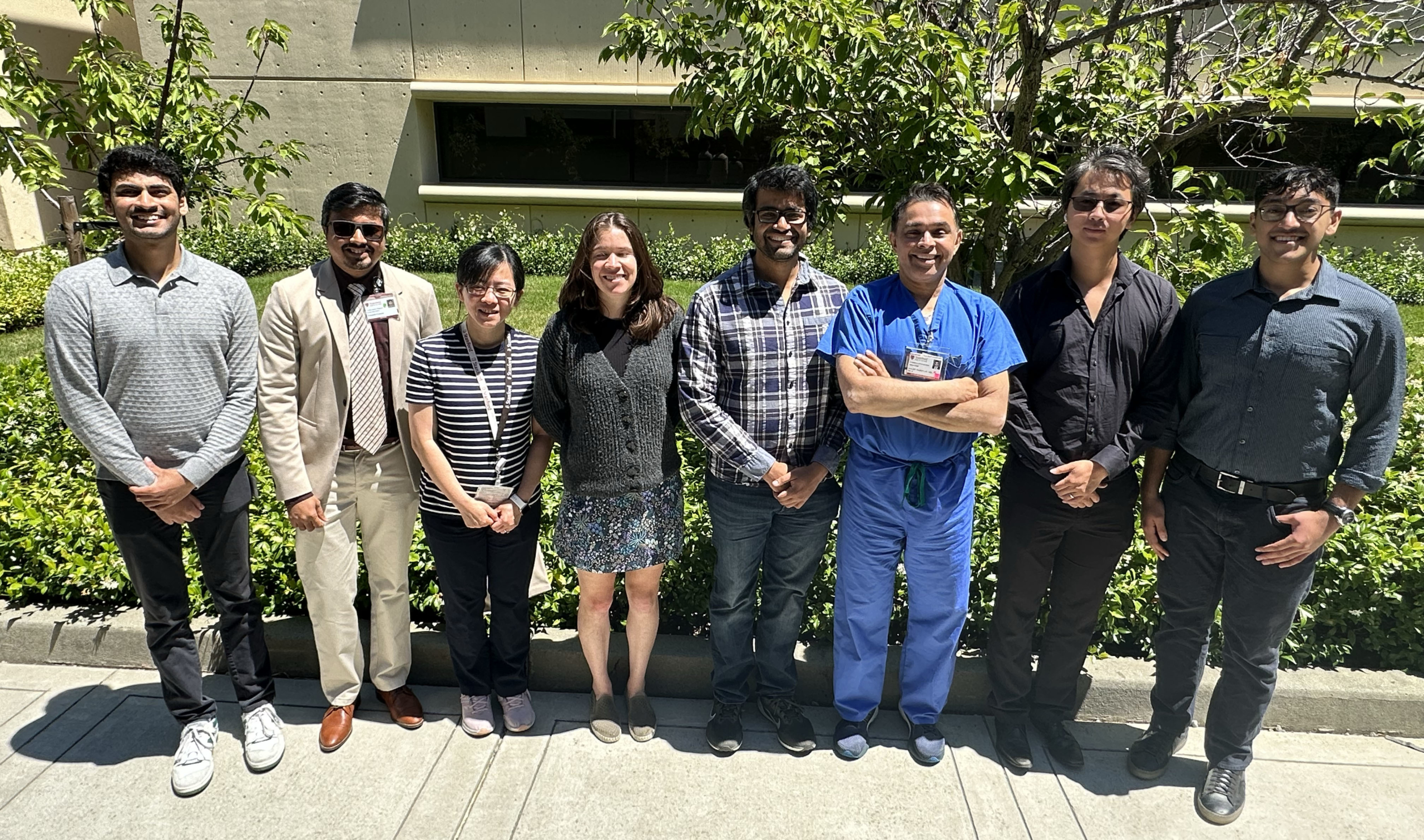
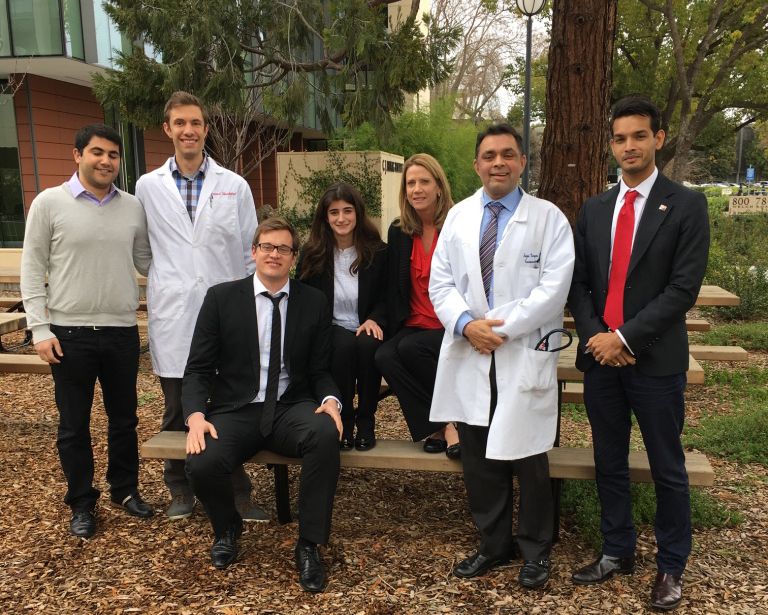
CARL Now and Then …
NEWS
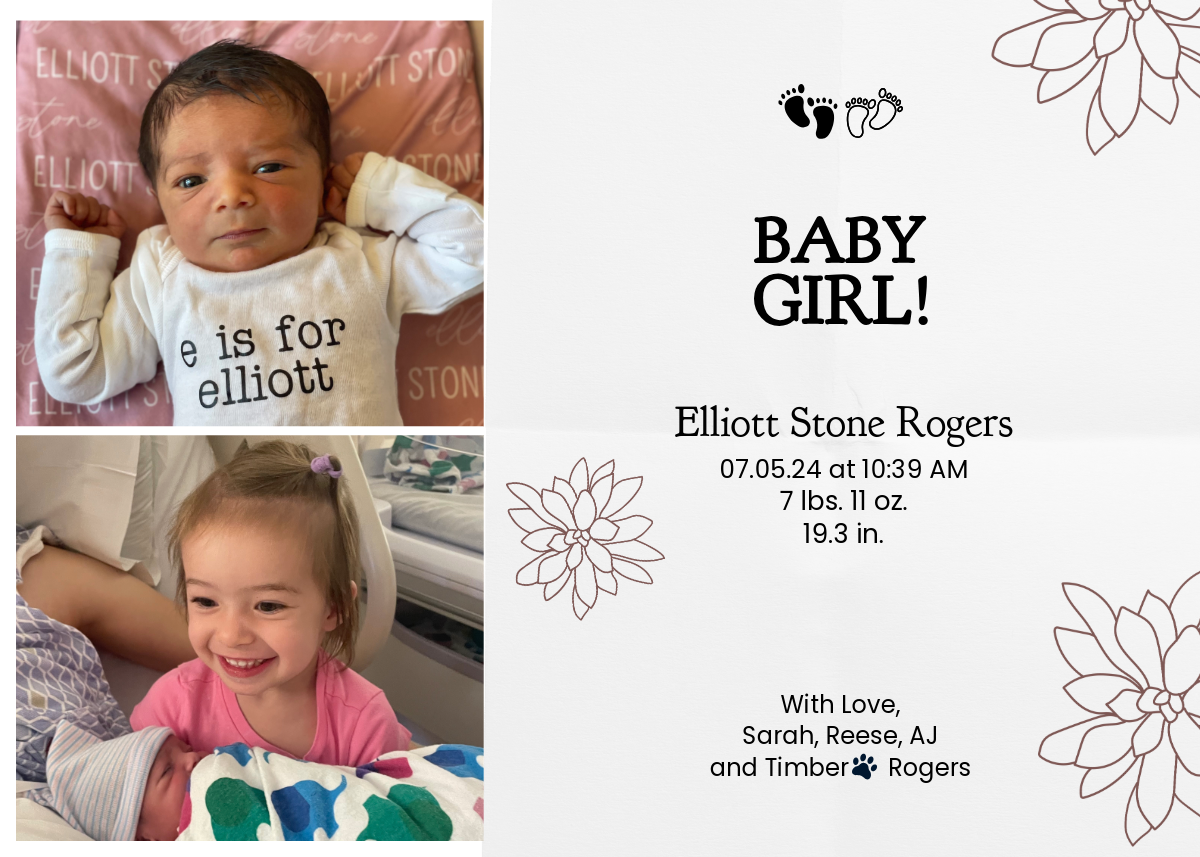
07/05/2024: Congrats to Sarah Stone and AJ Rogers on the birth of baby Elliott!
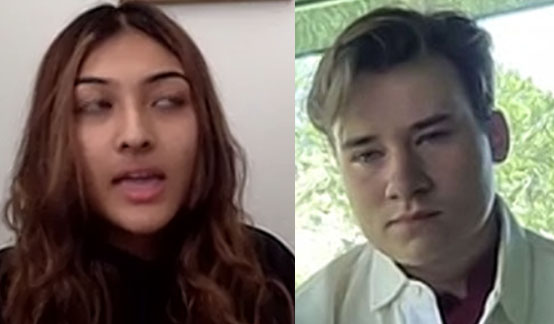
Welcome to July-August 2024 summer students Tasniya Rahman (USC, class of ’27) and Kingston Bridges (The American School of London, Texas A&M, class of ’28)!
See more photos here