Hi there 👋 and welcome to CS193T!
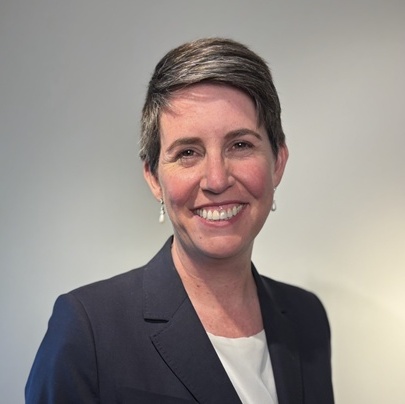
Teaching Team
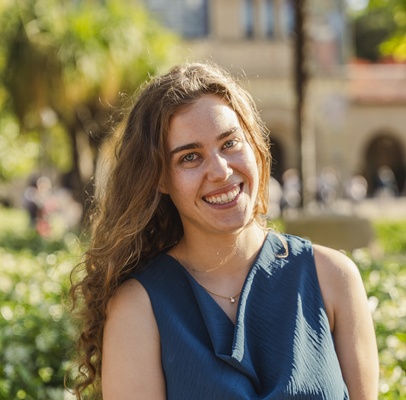

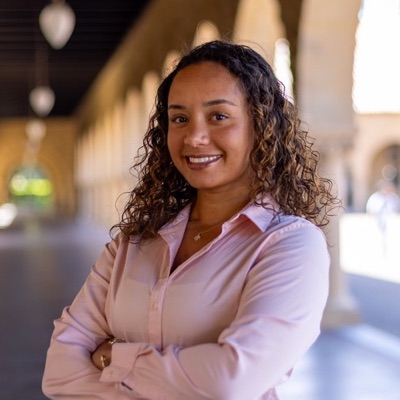
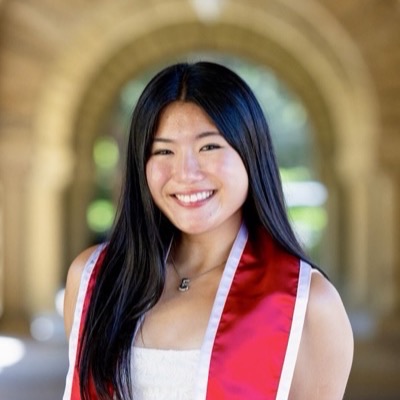
Teaching Assistants






Course Overview
Whether you’re excited, curious, skeptical, or just unsure where to start with AI, this course meets you there.
- Weekly hands-on tutorials, where you build with a dedicated TA who follows your work all quarter.
- Assignments are intended to be customized to the work you actually need to get done in your major, your career, your life.
- Guest speakers showcase use cases across the humanities, sciences, law, business, and more.
- Term project: Create a custom AI system that aids the work you’re doing now, and is portfolio-ready for your job search.
You’ll learn not just AI tool how-to, but when to trust, when to push back, and how to keep your own thinking and learning sharp along the way. We want to give you practical, immediately-applicable skills to get the most out of AI, but we’re not purveyors of mindless pro-AI hype. Our exploration of AI will take seriously societal concerns about bias, copyright, labor impacts, and environmental costs, as well as potential individual risks like emotional manipulation and impaired learning.
Topics
- How AI really works
- Advanced prompting skills
- Probing models’ strengths and weaknesses
- “Agentic” AI and complex reusable workflows
- Guest panel: research use cases
- Guest panel: industry use cases
- Educational AI tools, reflective self-governance of AI use
- Societal impacts
- Building audit and accountability systems
- Efficiency, tokens, and budget management
Tools
- Anthropic: Claude Chat, Claude Cowork, Claude Code
- Google: Gemini Enterprise, Notebook Gemini (AKA NotebookLM), Deep Research, Data Insights, Code Assist
- OpenAI: ChatGPT, ChatGPT Work, ChatGPTEdu, Codex
- Microsoft: Microsoft 365 Copilot, Github Copilot
- Free, open-source models (Deepseek, Mistral, Llama)
- Connectors from AI models to your Google Drive files, email, Slack, and more
No Prerequisites!
There are no prerequisites for this course. In fact, we’re hoping to create a comfortable place for all kinds of folks to learn and grow!
Units and Grading basis
2 units, S/NC. Our focus is on helping you deploy AI in your work, not points.
Lectures
Lectures will take place on Tuesdays at 1:30-2:50PM in NVIDIA Aud (Huang Building). There will be video recordings for auditors and excused absences. Attendance is mandatory for on-campus enrolled students.
Tutorials
Starting in week 2, you’ll meet weekly for an 80-minute tutorial in Coda, B80: 20 minutes on that week’s tool, then a full hour building with it yourself while TAs circulate to help. You’ll be placed in one block — Tuesday, Wednesday, Thursday, or Friday — and stay in it, with the same TA and the same table group, all quarter.
Each week your TA pulls you aside for a ten-minute check-in on the previous week’s assignment, tailored to your actual use cases, so you’ll always know whether you’re on track for passing expectations. Tutorial attendance is mandatory. Read more about tutorial.
Office hours are folded into tutorial this quarter: drop in on any tutorial block and a TA on floater duty will help you.
Assignments
Assignments are given weekly and assessed during tutorial. Most assignments are just asking you to deploy AI on the actual work you need to do anyway, so it is our expectation that the course will not add significant workload. We do want you to add layers of reflection, analysis, and comparison to your AI practice (e.g., If you attempt the same task using several different AI models what differences do you observe? Is there a better way you could have structured your use of AI for the task that would reduce token consumption and therefore environmental impact? What safeguards could you put in place to ensure the result is accurate?).
The assignments will culminate in a complex, custom AI system that will be showcased at an end of quarter poster session.
Grading
To earn an “S” grade, you must attend lecture and tutorial every week, and have all your assignments and final project signed off by your TA.
- Lecture: One excused lecture absence is pre-granted, however, this is intended to be used for circumstances that would usually merit an excused absence (e.g., illness, injury, serious family emergency, etc.). If such a circumstance befalls you and you reach out to us for accommodation, we will ask you to use your pre-granted day (so you will not want to use it for discretionary purposes). If you have serious circumstances that encompass more than one absence, we can discuss with you how to handle the situation.
- Tutorial: Attendance at all tutorials is required, because that is when your homework will be checked. If you are unable to attend your own block in a given week, come to a different one instead — a TA on floater duty will do your ten-minute check-in and you’ll join another table group for the rest of the session. Email your tutorial TA as soon as possible (even weeks in advance, if you know that far in advance) so they know where you’ll be.
- Assignments: Although there are no “points,” you should always have a good sense of where you stand on your assignments, because you will be having conversations with you TA about them weekly. Your TA will clearly commuicate to you if you are ever off track and at risk of not passing, so “no news is good news” in that sense. If you are given an off-track warning, you and your TA will have a conversation about how to get back on track.
We want to fully support everyone to pass!
Textbook, Expenses
There is no textbook for the course.
Stanford has already licensed premium versions of the AI tools we will use, so there is no need for additional expenditure on AI tools. You will need a laptop to access some of the tools.
If any aspect of the course presents financial burdens for you, please contact the Head TA or instructor for assistance.
Accommodations
Students who need an academic accommodation based on the impact of a disability should initiate a request with the Office of Accessible Education. Professional staff will evaluate the request with required documentation, recommend reasonable accommodations, and prepare an Accommodation Letter dated in the current quarter. Students should contact the OAE as soon as possible since timely notice is needed to coordinate accommodations. The OAE has contact information on their web page http://oae.stanford.edu.
Syllabus Modifications
Stanford as an institution is committed to the highest quality education, and as your teaching team, our first priority is to uphold your educational experience. To that end we are committed to following the syllabus as written here, including through short or long-term disruptions, such as public health emergencies, natural disasters, or protests and demonstrations. However, there may be extenuating circumstances that necessitate some changes. Should adjustments be necessary we will communicate clearly and promptly to ensure you understand the expectations and are positioned for successful learning.