



Connecting the Dots 2011
Speakers
Welcome
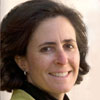
Stacey Bent, Chemical Engineering; Director, TomKat Center for Sustainable Energy; Co-director, Center on Nanostructuring for Efficient Energy Conversion.
Professor Bent's research focuses on semiconductor processing, surface science, and materials chemistry, working toward applications in renewable energy devices and nanoelectronics. She is also professor (by courtesy) of chemistry, electrical engineering, and materials science and engineering, and co-directs the Department of Energy's Center on Nanostructuring for Efficient Energy Conversion at Stanford.
Stanford Faculty Talks
The Global Food Challenge
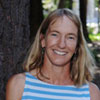
Roz Naylor, Environmental Earth System Science; Director, Program on Food Security and the Environment
Roz focuses on the environmental and equity dimensions of intensive food production, and issues of aquaculture production, high-input agricultural development, biotechnology, climate-induced yield variability, and food security.
The Food-Energy Nexus
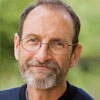
Chris Field, Professor of Biology and Environmental Earth System Science; Founding Director, Carnegie Institution's Department of Global Ecology
Professor Field's research emphasizes impacts of climate change, from the molecular to the global scale, and includes major field experiments on responses of California grassland to multi-factor global change, integrative studies on the global carbon cycle, and assessments of impacts of climate change on agriculture. He is also the faculty director of the Jasper Ridge Biological Preserve.
The Food-Climate Nexus

David Lobell, Environmental Earth System Science
David's research focuses on identifying opportunities to raise crop yields in major agricultural regions, with a particular emphasis on adaptation to climate change. His current projects involve a range of tools including remote sensing, GIS, and crop and climate models.
Water Nexuses
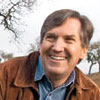
Buzz Thompson, Natural Resources Law; Director, Woods Institute for the Environment
Buzz focuses on the sustainable use of natural resources and the effective reform of regulatory institutions. He has published articles on such diverse topics as water markets, fisheries management, biodiversity protection, land conservation, the use of economics and market tools in environmental regulation, and cognitive barriers to resource management.
Stanford Faculty Talks (Cont.)
Institutions, Security, and the Global Food System
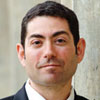
Mariano-Florentino (Tino) Cuellar, Professor of Law; Deane F. Johnson Faculty Scholar, Stanford Law School
Food insecurity affects hundreds of millions of people around the world, creating the potential for instability, violence, and adverse health affects. Professor Cuellar will discuss the importance of understanding the connections between food security, institutions, and the broader international security environment. He will review how problems involving access to food and nutrition can exacerbate a variety of domestic and international security challenges, including violence, migration, and infectious disease, and will survey how these linkages between food, security, and institutions can play out in societies facing disruptions in food security. He will also explore how an advanced industrialized country like the United States also demonstrates the potential impact of institutions on the food system and international security, and how political, legal, and bureaucratic factors in the United States sometimes obscure the potential security-related consequences of agricultural policies, highlighting the significance of domestic institutional factors on the international system.
Professor Cuellar is also a faculty member in the Center for International Security and Cooperation at the Freeman Spogli Institute for International Studies. His research and teaching focus on administrative law, executive power, and how organizations implement critical regulatory, public safety, migration, and international security responsibilities in a changing world.
Plenary and Panel Discussion
The Way Forward
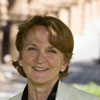
Pam Matson, Chester Naramore Dean, School of Earth Sciences; Richard and Rhoda Goldman Professor of Environmental Studies
Dean Matson studies the cycling of carbon, nitrogen, and other elements between soil, water, and atmosphere, focusing primarily on the effects of land use and climate change in tropical forest and agricultural systems. She is also a senior fellow at the Woods Institute for the Environment and a co-leader of Stanford's Initiative on Environment and Sustainability.