



Connecting the Dots 2013
Speakers
Welcome

Stacey Bent, Chemical Engineering; Director, TomKat Center for Sustainable Energy; Co-director, Center on Nanostructuring for Efficient Energy Conversion.
Stacey Bent is a professor of chemical engineering; director of the TomKat Center for Sustainable Energy; co-director of the Center on Nanostructuring for Efficient Energy Conversion (CNEEC); and a senior fellow at the Precourt Institute for Energy. Bent leads an active research group in semiconductor processing, surface science and materials chemistry. She supervises students and postdocs working toward applications in renewable energy devices and next-generation microelectronics. Bent received the Tau Beta Pi Award for Excellence in Undergraduate Teaching (2006), the Coblentz Award (2001) and a National Science Foundation CAREER Award (1995). She earned a BS in chemical engineering at UC-Berkeley and attended graduate school as a National Science Foundation Predoctoral Fellow at Stanford, earning a PhD in chemistry. She was a postdoctoral fellow at AT&T Bell Laboratories in New Jersey.
Stanford Faculty Talks
Introduction: Energy System Overview
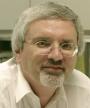 Roland Horne, Professor in Energy Resources Engineering, School of Earth Sciences
Roland Horne is the Thomas Davis Barrow Professor of Earth Sciences, professor of energy resources engineering and senior fellow at the Precourt Institute for Energy at Stanford. He also serves as director of the Stanford Geothermal Program in the School of Earth Sciences. He was chair of the Department of Petroleum Engineering at Stanford from 1995 to 2006. Much of Horne’s research focuses on geothermal energy, particularly well test interpretation, production optimization and tracer analysis of fractured geothermal reservoirs. He is an honorary member of the Society of Petroleum Engineers and a member of the U.S. National Academy of Engineering. He is president of the International Geothermal Association and a past member of the IGA board of directors. Horne was technical program chairman of the World Geothermal Congress in Turkey (2005), Bali (2010) and will chair the Melbourne congress in 2015. He is a founder of the IGA online database of geothermal conference papers.
Overview of Natural Gas Issues
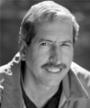
Mark Zoback, Professor in the Department of Geophysics
Mark Zoback is the Benjamin M. Page Professor in Earth Sciences and director of the Stress and Crustal Mechanics Group in the Department of Geophysics at Stanford. He conducts research on in situ stress, fault mechanics and reservoir geomechanics. Zoback served on the National Academy of Energy committee investigating the Deepwater Horizon oil spill in the Gulf of Mexico, and on the U.S. Secretary of Energy’s committee on shale gas development and environmental protection. He was also a principal investigator on the San Andreas Fault Observatory at Depth (SAFOD), a research project that drilled through the San Andreas Fault to study seismicity at depth. Zoback’s awards include the Emil Wiechert Medal of the German Geophysical Society (2006) and the Walter H. Bucher Medal from the American Geophysical Union (2008). He earned three geophysics degrees: a BS from the University of Arizona, and an MS and PhD from Stanford.
Energy and Environment Nexus

Stefan Reichelstein, Professor of Accounting at Stanford’s Graduate School of Business (GSB)
Stefan Reichelstein is the William R. Timken Professor in the Graduate School of Business and a senior fellow at the Stanford Woods Institute for the Environment. He is also an affiliate faculty in the Emmett Interdisciplinary Program in Environment and Resources (E-IPER). Reichelstein conducts research on the interface of management accounting and economics. Much of his work has addressed issues in cost- and profitability analysis, decentralization, internal pricing and performance measurement. In recent years, Reichelstein has studied the cost of reducing carbon emissions and the cost competitiveness of different energy sources. He has also introduced courses on sustainability and clean energy at Stanford. He has served on the faculty of the Haas School of Business at UC-Berkeley and at the University of Vienna in Austria.
Energy and Water Nexus

Richard Luthy, Professor Civil and Environmental Engineering, Director of ReNUWit
Dick's area of teaching and research is environmental engineering and water quality with application to water reuse and management of contaminated sediments. His work addresses the fate of hydrophobic organic compounds, interdisciplinary approaches to understand the behavior and bioavailability of organic contaminants, and the application of these approaches to environmental quality criteria and new cleanup practices.
Energy and Climate Change Nexus

Michael Wara, Assistant Professor of Law
An expert on environmental and energy law and policy, Michael Wara’s research focuses on climate policy and regulation, and on the role of new technologies in the electricity sector. Professor Wara SLS’06 was formerly a geochemist and climate scientist and has published work on the history of the El Niño/La Niña system and its response to changing climate. He received his PhD from UC Santa Cruz in Ocean Sciences Professor Wara joined Stanford Law in 2007 as a research fellow in environmental law and as a lecturer in law. Previously, he was an associate in Holland & Knight's Government Practice Group, where his practice focused on climate change, land use, and environmental law. Professor Wara is a research fellow at the Program in Energy and Sustainable Development in Stanford’s Freeman Spogli Institute for International Studies and a Center Fellow at the Woods Institute for the Environment.
Energy and Food Nexus

David Lobell, Environmental Earth System Science
David's research focuses on identifying opportunities to raise crop yields in major agricultural regions, with a particular emphasis on adaptation to climate change. His current projects involve a range of tools including remote sensing, GIS, and crop and climate models.
Breakout Sessions
Boom or Bust? Hydraulic Fracturing’s Socioeconomic Costs and Benefits
Joel Minor, Graduate Student, School of Earth Sciences-Emmett Interdisciplinary Program in Environment & Resources (E-IPER) and Stanford Law School
Joel Minor is a second year law student, simultaneously pursuing a master of science degree in environment and resources from Stanford’s E-IPER program. Joel earned a bachelor of arts in environmental policy from Colorado College. In law school, he studies the law and policy of regulating the ongoing oil and gas boom with an emphasis on the role of local governments. In the E-IPER program, he explores the science behind pollution from the oil and gas sector, with a particular emphasis on air quality. Joel has worked on oil and gas issues with organizations including Environmental Defense Fund, the Sierra Club, and the Stanford Environmental Law Clinic. He will continue such work at Earthjustice this summer.
Keystone XL: Bad Guy or Fall Guy?
Scott McNally, Graduate Student, Energy Resources Engineering
Scott McNally holds a bachelor of science degree in chemical engineering from the University of Texas at Austin. He is pursuing dual master’s degrees in energy resources engineering at Stanford and in public policy at Harvard University. Scott worked as a renewable energy project administrator at Austin Energy, a project development engineer at Shell Oil Co., an energy and climate research intern at the White House Council on Environmental Quality, and an Oak Ridge Institute for Science and Education fellow at the U.S. Department of Energy.
Breakout Sessions: Continued
Wind Energy and Wildlife Conservation: Green vs. Green?
Adam Pearson, Graduate Student, Civil & Environmental Engineering
As a 2012 MAP sustainable energy fellow at the National Audubon Society, Adam Pearson’s work focused on communicating recent rulings and guidelines issued by the U.S. Fish & Wildlife Service relating to wind energy and wildlife. Adam wrote a citizen's guide for civilians and activists to encourage cooperative and constructive contributions on wind development projects. This document laid out the legal background and existing expectations for pre-construction, construction, and post-construction wildlife assessment processes. Adam has also focused on this topic in two episodes of his energy/environment radio program, "Green Grid Radio."
Are You Aware of Your Habits? Tweaking Our Routines to Conserve
Bryce Anzelmo, Graduate Student, Energy Resources Engineering
Bryce Anzelmo earned a bachelor’s degree in mechanical engineering from the New Jersey Institute of Technology and a master’s degree from Columbia University. Under the direction of Klaus Lackner at Columbia, he studied ways to mitigate carbon dioxide directly from the atmosphere. Bryce worked for an environmental consulting firm in New York City before undertaking a backpacking exploration to study energy usage around the world. This drove him to pursue independent research in the energy sector at an advanced level. Bryce landed on the Farm in August 2012 in search of challenging questions that require a multi-disciplinary approach.
Is America Neglecting America? The Forgotten Frontier of the Alaskan Arctic
Drew DeWalt, Graduate Student, Stanford Graduate School of Business
Drew DeWalt is a joint master of public policy and master in business administration candidate. Drew has focused his program of study on energy resources, energy policy and entrepreneurship. He recently completed his thesis work on distributed energy solutions for the Arctic. The thesis was sponsored by Stanford’s Hoover Institution. Prior to Stanford, Drew was a nuclear submarine officer in the U.S. Navy. He is working with two of his fellow classmates to develop a renewable energy project in Chile. The project will combine a large-scale solar array with a utility-scale energy storage unit. The development will address the unique needs of an energy grid in Chile’s Atacama Desert.
Is Water Scarcity a Threat to the World’s Energy Future?
Sujith Ravi, Postdoctoral Scholar, Environmental Earth System Science
Sujith Ravi is a postdoctoral scholar in the Department of Earth System Science and the Center on Food Security & the Environment. Sujith has an undergraduate degree in agricultural sciences from Kerala Agricultural University (India), as well as master’s and doctoral degrees in environmental sciences (hydrology) from the University of Virginia. Sujith’s research interests are in the areas of soil science, water resources and land degradation. He worked as an assistant research professor at the Biosphere 2 facility of the University of Arizona. As a postdoctoral scholar, Sujith is investigating the environmental impacts on land and water resources of large solar infrastructures in deserts, and exploring opportunities for integrating solar projects with agriculture/biofuels.
Plenary Discussion
The Way Forward

Moderator: Margot Gerritsen, Associate Professor of Energy Resources Engineering; Director, Institute for Computational and Mathematical Engineering
Margot Gerritsen is an associate professor of energy resources engineering and the director of the Institute for Computational and Mathematical Engineering (ICME) at Stanford. Her work is about understanding and simulating complicated fluid flow problems, focusing on the design of highly accurate computational methods to predict the performance of enhanced oil recovery methods. She is particularly interested in gas injection and in-situ combustion processes. Outside petroleum engineering, Gerritsen conducts collaborative research on coastal ocean simulation, yachts and boating, pterosaur flight mechanics, and the design of search algorithms. She teaches courses on energy-related topics (reservoir simulation, energy and the environment) and mathematics for engineers. She also blogs and holds public talks on energy-related topics. Gerritsen earned an MSc in applied mathematics from Delft University of Technology, and a PhD in scientific computing and computational mathematics from Stanford.
Panelists: Donald Kennedy, Roz Naylor, and Adam Brandt
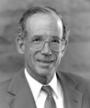
Donald Kennedy, Stanford University President, Emeritus; Bing Professor of Environmental Science, Emeritus
Don Kennedy is Stanford University President, Emeritus; Bing Professor of Environmental Science, Emeritus; and senior fellow, emeritus, at the Stanford Woods Institute for the Environment, and at the Freeman Spogli Institute for International Studies. He recently served as editor-in-chief of Science, the journal of the American Association for the Advancement of Science. His research focuses on trans-boundary environmental problems, such as major land-use changes, economically driven alterations in agricultural practice and global climate change. Kennedy joined the Stanford faculty in 1960. From 1980 to 1992, he was university president. From 1977-79, he was commissioner of the U.S. Food and Drug Administration. He earned an AB and PhD in biology from Harvard University

Roz Naylor, Environmental Earth System Science; Director, Program on Food Security and the Environment
Roz Naylor is the director of the Center on Food Security and the Environment, the William Wrigley Senior Fellow at the Freeman-Spogli Institute for International Studies and the Stanford Woods Institute of the Environment, and a professor of environmental Earth system science at Stanford. Her research focuses on the environmental and equity dimensions of intensive food production, and issues of aquaculture production, high-input agricultural development, biotechnology, climate-induced yield variability, and food security. Naylor teaches courses on the world food economy, food and security, human-environment interactions, and aquaculture science and policy. Naylor received a BA in economics and environmental studies from the University of Colorado, an MSc in economics from the London School of Economics and a PhD in applied economics from Stanford.

Adam Brandt, Assistant Professor in the Department of Energy Resources Engineering, Stanford University
Adam Brandt is an assistant professor of energy resources engineering at Stanford. His research focuses on the environmental impacts of oil shale and other substitutes for conventional petroleum; mathematical modeling of petroleum depletion and the transition to oil substitutes; and capture and storage systems. As a teacher, his goal is to help train the next generation of energy professionals to optimize energy systems so as to improve their efficiency, rigorously account for the environmental impacts of energy sources and think critically about systems-scale phenomena in energy production and consumption. Brandt earned a BS in environmental studies with an emphasis on physics from UC-Santa Barbara, and an MS and PHD from the Energy and Resources Group at UC-Berkeley.