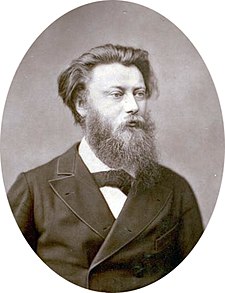
Biographies of section namesakesHertha Ayrton (1854–1923, English) made contributions on electric arcs, which were commonly used for public lighting in the late 19th century. For this work, she was the first female recipient of the Hughes Medal, awarded by the Royal Society of London in 1906. Alexander Bell (1847–1922, Scottish) was an inventor and engineer who first patented the telephone. He also did groundbreaking work in optical communications, hydrofoils, and aeronautics. Lynn Conway (1938–, American) pioneered the Mead & Conway revolution in very-large-scale integration design, the techniques used to engineer integrated circuits such as microprocessors. She is a professor emerita of electrical engineering and computer science at the University of Michigan and an advocate for transgender awareness and normalization. Ray Dolby (1933–, American) invented the Dolby Noise Reduction system which manipulates the high frequency components of sound to reduce tape hiss. Thelma Estrin (1924–2014, American) was a pioneer in biomedical engineering, one of the first to apply computer technology to healthcare and medical research. She was the first female IEEE vice-president and a professor emerita of computer science at UCLA. Michael Faraday (1791-1867, English) revolutionized scientific understanding of electromagnetism by discovering electromagnetic induction, which made electric motor technology possible. He discovered a relationship between electromagnetism and light, leading towards the discovery that light is actually electromagnetic radiation. Carl Gauss (1777–1855, German) made numerous contributions in mathematics and physics. To name just two relevant to electrical engineering, he discovered the relationship between charge density and electric field (Gauss’ law) and the normal distribution in statistics, often called the Gaussian distribution. Caroline Haslett (1895–1957, British) campaigned for women in engineering fields by, among other accomplishments, being the first secretary of the Women's Engineering Society. She aimed to free women from housework drudgery by automating homes with electricity. Kees Immink (1946–, Dutch) pioneered digital recording and storage, in particular the Compact Disc, DVD and Blu-ray Disc. He is the president of Turing Machines Inc., which he founded in 1998. Ali Javan (1926–, Iranian, American) co-invented the gas laser, which laid the foundation for fiber optic communication and is used today in holography. He is a professor emeritus of physics at MIT. Rudolf Kálmán (1930–, Hungarian, American) co-invented the Kalman filter, an algorithm widely used in signal processing and control. He is a professor emeritus of mathematics at ETH Zurich, Switzerland. Hedy Lamarr (1914–2000, Austrian, American) co-invented frequency hopping, a form of spread spectrum radio communication, that became particularly important to America’s military in World War II. She was also a successful Hollywood film star. Guglielmo Marconi (1874–1937, Italian) vastly improved radio technology and made it commercially viable. For his contributions to wireless communication, he won the Nobel Prize for Physics in 1909. Shuji Nakamura (1954–, Japanese, American) invented the blue LED, a major breakthrough that paved the way for bright and white LEDs, enabling the use of LEDs as a lighting source. He received the Nobel Prize in Physics in 2014 and is a professor of materials at the University of California, Santa Barbara. Stanford Ovshinsky (1922–2012, American) was an extremely prolific inventor who created over 400 patents in fifty years ranging from improved batteries, thin-film solar films, and rewritable CDs. He even pioneered the fields of amorphous materials and neurophysiology. Bill Pickering (1910–2004, New Zealander) was a senior NASA luminary and pioneered space exploration. Irving Reed (1923–2012, American) made contributions to electrical engineering and signal processing including radar and a type of error-correcting codes called Reed-Solomon codes. Claude Shannon (1916–2001, American) is widely known as the “father of information theory”, the study of fundamental limits in reliable data compression and communication. He received the IEEE Medal of Honor in 1966. Nikola Tesla (1856–1943, Serbian, American) is best known for his contributions to the modern alternating current (AC) electricity supply system, but also was one of the first contributors to wireless communication. The unit of magnetic flux density is named after him. Juris Upatnieks (1936–, Latvian, American) is a pioneer in holography, demonstrating the first three-dimensional holograms in the United States with Emmett Leith. Andrew Viterbi (1935–, American) is an electrical engineer and co-founder of Qualcomm who invented the Viterbi algorithm, which is used very widely for data transmission and speech processing. George Westinghouse (1846–1914, American) was an entrepeneur who championed the system of alternating current in use in the modern electricity distribution grid. His main rival was Thomas Edison, who favored direct current. Pavel Yablochkov (1847–1894, Russian) was an electrical engineer with a great beard who invented an arc lamp (a predecessor to the light bulb) and the transformer for changing electrical voltages. Clarence Zener (1905–1993, American) described the breakdown of electrical insulators, findings which were used to develop a diode with a low reverse breakdown voltage, known as the Zener diode. He was an alumnus of Stanford (’26). |